
Moonlighting in the Modern Workforce: Balancing Opportunity, Risk, and Organizational Integrity
Moonlighting—commonly defined as the practice of undertaking multiple jobs in addition to one’s primary employment—has become an increasingly prevalent phenomenon in today’s evolving workforce landscape. While traditionally associated with supplementary or part-time work, moonlighting in the modern context can extend to multiple simultaneous engagements, sometimes far beyond conventional limits.
The rise of flexible work models, digital platforms, and remote opportunities has made it easier than ever for professionals to explore additional income streams. However, this trend brings with it significant implications for both employees and organizations.
The Pandemic Effect: A Catalyst for Moonlighting
The COVID-19 pandemic served as a major turning point in workforce behavior. During periods of lockdown and economic uncertainty, many professionals experienced:
- Salary reductions and financial instability
- Increased household expenses
- Job insecurity and uncertainty about the future
In response, individuals began seeking alternative sources of income through freelance work, short-term projects, and additional roles. What initially emerged as a necessity has, for many, evolved into a sustained practice driven by financial aspirations and perceived productivity gains.
Why Moonlighting Continues Post-Pandemic
Even as the global economy stabilizes, moonlighting continues to gain traction due to several factors:
- Increased earning potential through multiple income streams
- Access to remote and flexible work opportunities
- Growing confidence in managing multiple responsibilities
- Desire for financial security and lifestyle enhancement
While these motivations are understandable, they often overlook the long-term consequences associated with excessive workload and divided professional focus.
Risks and Challenges Associated with Moonlighting
1. Impact on Employee Performance
Managing multiple roles simultaneously can lead to:
- Reduced productivity in primary employment
- Missed deadlines and compromised quality of work
- Lack of focus and engagement
Organizations rely on employees to perform at their best, and divided attention can significantly affect operational efficiency.
2. Health and Well-Being Concerns
Continuous work without adequate rest can result in:
- Physical exhaustion and burnout
- Mental stress and reduced cognitive performance
- Long-term health complications
Employee well-being is a critical factor in sustaining productivity, and excessive moonlighting can jeopardize both personal and professional stability.
3. Policy and Compliance Risks
Many organizations have policies that either restrict or regulate moonlighting due to concerns such as:
- Conflict of interest
- Data security and confidentiality breaches
- Misuse of organizational resources
Non-compliance with such policies can lead to disciplinary actions and reputational risks.
4. Organizational Case Insights
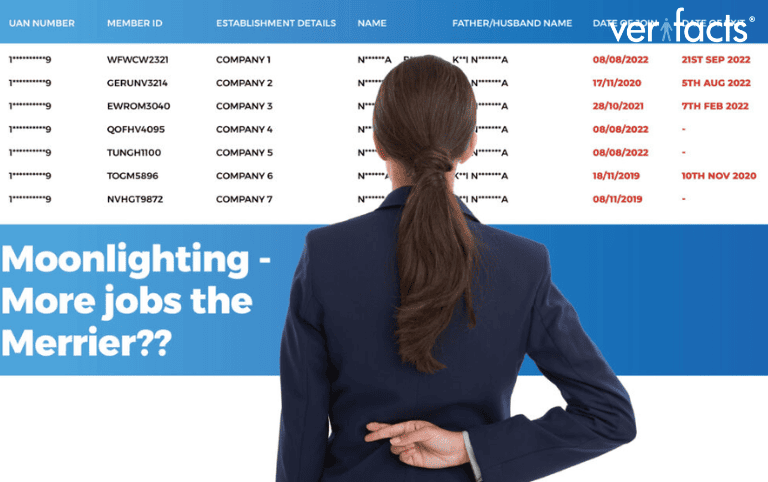
In practical scenarios, organizations are increasingly identifying cases where employees engage in multiple concurrent roles without disclosure. In one such instance, a workforce assessment revealed an individual managing multiple additional engagements alongside full-time employment, raising concerns about compliance, performance, and trust.
Such cases highlight the importance of proactive monitoring and verification mechanisms within organizations.
The Role of Background Verification and Workforce Audits
To address the challenges posed by moonlighting, organizations are turning to comprehensive background verification and internal audits.
Key Benefits Include:
- Identifying undisclosed employment engagements
- Ensuring compliance with organizational policies
- Detecting potential conflicts of interest
- Strengthening workforce transparency and accountability
Periodic verification processes help organizations maintain clarity, control, and confidence in their workforce.
Creating Awareness and Encouraging Responsible Practices
While enforcement is important, organizations must also focus on awareness and communication.
Recommended Approaches:
- Clearly define and communicate moonlighting policies
- Educate employees about potential risks and consequences
- Encourage transparency and open dialogue
- Promote work-life balance and employee well-being
By fostering a culture of trust and responsibility, organizations can reduce policy violations and enhance employee engagement.
Partnering with Verifacts Services Pvt. Ltd. for Workforce Integrity
In an increasingly complex employment landscape, organizations require reliable solutions to ensure workforce integrity and compliance.
Verifacts Services Pvt. Ltd. offers specialized services in background verification, due diligence, and risk management, enabling organizations to effectively address challenges such as undisclosed employment and policy violations.
Key Advantages of Verifacts Solutions:
- Comprehensive Workforce Verification
Identifying discrepancies and ensuring transparency - Risk Mitigation
Detecting potential threats to organizational security and performance - Accurate and Timely Reporting
Supporting informed decision-making - Compliance Support
Ensuring alignment with organizational policies and industry standards
By integrating Verifacts’ solutions into workforce management strategies, organizations can build a trustworthy, compliant, and high-performing workforce.
Conclusion: Striking the Right Balance
Moonlighting reflects the evolving nature of work in a digital and opportunity-rich environment. While it offers financial and professional benefits to individuals, it also presents significant risks that must be carefully managed.
Organizations must adopt a balanced approach—combining clear policies, employee awareness, and robust verification mechanisms—to address the challenges effectively.
Ultimately, safeguarding both employee well-being and organizational integrity requires proactive action rather than reactive measures. As always, prevention is better than correction.
With the support of Verifacts Services Pvt. Ltd., businesses can confidently navigate the complexities of modern employment practices while ensuring trust, transparency, and long-term success.
